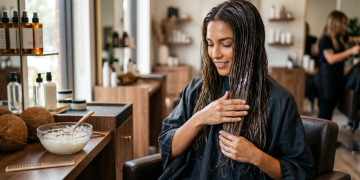
A few years ago, I found myself standing in the hair care aisle staring at products that all promised the same thing – stronger hair, more moisture, less frizz. The labels looked impressive, but after trying several of them, my hair still felt dry by the end of the week.
That’s when I started paying closer attention to ingredients rather than marketing claims. Two names kept appearing over and over again: shea butter and coconut oil.
At first, I used them separately. Then I tried combining them. The difference was noticeable.
Today, shea butter with coconut oil for hair remains one of the simplest treatments people use to bring moisture back to dry, stressed-out hair without spending a fortune on salon products.


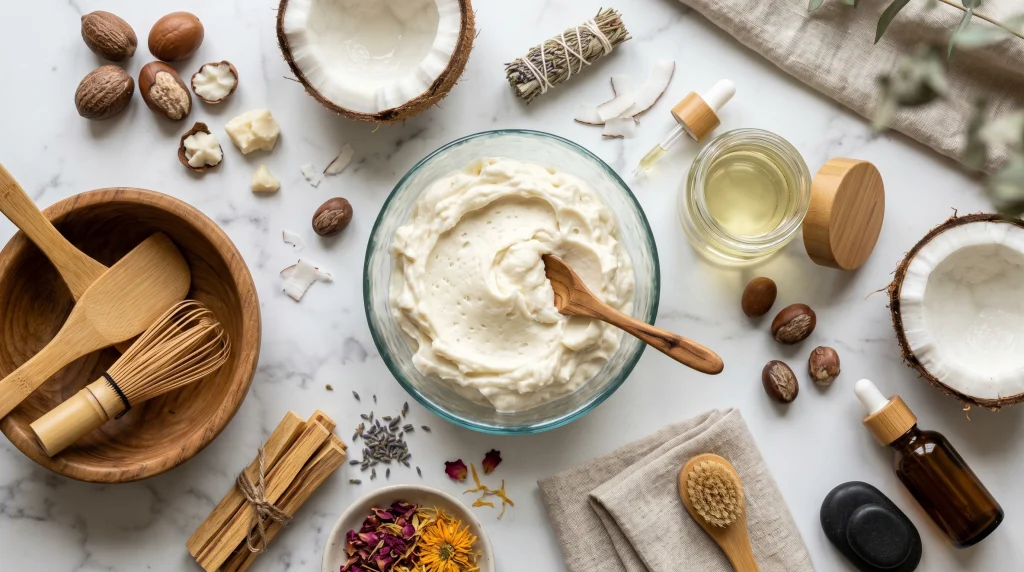
Why This Combination Works So Well
Some ingredients sound great on paper but don’t do much in practice. Shea butter and coconut oil are different because they solve two common hair problems at the same time.
Coconut oil helps penetrate the hair shaft and reduce moisture loss. Shea butter acts more like a protective seal, helping keep that moisture locked in.
Think of coconut oil as the ingredient that gets inside the hair and shea butter as the one that helps keep everything there.
That’s why shea butter with coconut oil for hair has become a favorite among people with curly, textured, damaged, or color-treated hair.
The Problem With Dry Hair
Dry hair isn’t always caused by a lack of products.
Sometimes it’s the result of habits we barely think about.
Hot showers. Blow dryers. Hair dye. Sun exposure. Even washing too frequently can strip away natural oils.
I’ve noticed that many people keep adding more styling products when their hair feels rough, but what their hair often needs is moisture and protection rather than another styling cream.
This is where a blend of shea butter and coconut oil can make a difference.
What Each Ingredient Brings to the Table
Coconut Oil
Coconut oil has been used in hair care for generations.
Its popularity isn’t just based on tradition. Research has shown that coconut oil can help reduce protein loss in hair, which may improve overall strength and reduce breakage over time.
Many people also notice:
- Better softness
- Reduced frizz
- Increased shine
- Easier detangling
Shea Butter
Shea butter feels much richer than coconut oil.
It’s packed with fatty acids and vitamins that help soften hair while creating a protective layer around each strand.
For people dealing with brittle ends or hair that constantly feels rough, shea butter often provides that extra level of nourishment.
Combining the two creates a treatment that addresses both hydration and protection.
Shea Butter vs Coconut Oil
People often ask whether one is better than the other.
The truth is that they serve different purposes.
| Feature | Shea Butter | Coconut Oil |
| Deep Moisture | Excellent | Good |
| Hair Penetration | Moderate | High |
| Frizz Control | Excellent | Good |
| Shine Enhancement | Good | Excellent |
| Heavy Texture | Yes | Moderate |
| Best For | Dry, coarse hair | Damaged, porous hair |
This is exactly why shea butter with coconut oil for hair tends to outperform using either ingredient alone.
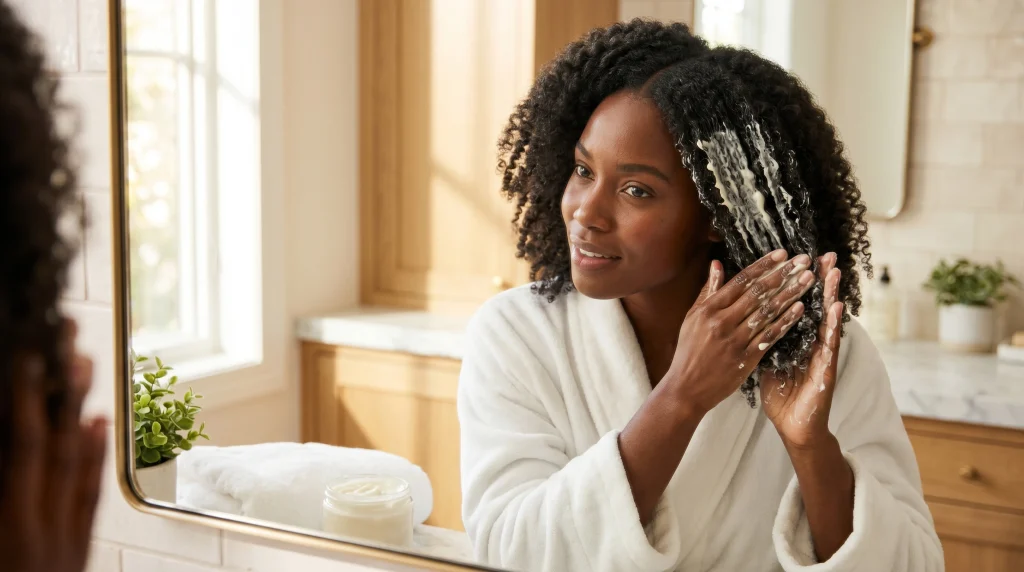
A Simple Hair Mask You Can Make at Home
The first time I tried making this treatment, I honestly expected it to be messy and complicated.
It wasn’t.
You only need:
- 2 tablespoons shea butter
- 1 tablespoon coconut oil
Warm them slightly until they soften and mix together.
Apply the mixture from mid-length to ends. If your scalp is dry, you can massage a small amount there as well.
Leave it on for about 30 minutes before shampooing.
Some people prefer overnight treatments, but I’ve found that half an hour often provides noticeable results without leaving hair feeling too heavy.
Who Benefits Most From This Treatment?
Not every hair product works for everyone, and that’s worth remembering.
However, shea butter with coconut oil for hair tends to work particularly well for:
Curly Hair
Curly hair naturally struggles to retain moisture because oils have a harder time traveling down the hair shaft.
The extra hydration can help curls look more defined and less frizzy.
Color-Treated Hair
Bleaching and coloring often leave hair feeling dry.
A moisturizing treatment may help improve softness and manageability between salon visits.
Thick Hair
People with thick hair usually tolerate richer ingredients better than those with very fine hair.
Heat-Damaged Hair
If flat irons, curling wands, or blow dryers are part of your routine, adding moisture back into your hair can help reduce the appearance of damage.
Common Mistakes People Make
I see one mistake more than any other.
Using too much.
Because both ingredients are rich, a little goes a long way.
Applying excessive amounts won’t necessarily improve results. In fact, it often leads to greasy-looking hair that requires multiple washes to remove.
Another mistake is expecting instant repair.
Hair that’s been damaged over months or years won’t completely transform after one treatment. Consistency matters.
What Results Can You Expect?
Most people notice improved softness fairly quickly.
Shine often improves after the first use.
Longer-term benefits may include:
- Less breakage
- Better moisture retention
- Easier styling
- Reduced frizz
- Healthier-looking ends
The key is maintaining realistic expectations. Natural ingredients can support healthier hair, but they aren’t magic.
Frequently Asked Questions
Can I use shea butter with coconut oil for hair every week?
Yes. Many people use it once or twice a week as part of their regular hair care routine.
Will this make my hair greasy?
Using too much can leave residue behind. Start with a small amount and adjust based on your hair type.
Is it safe for color-treated hair?
Generally, yes. Many people with dyed or bleached hair use this combination to improve moisture levels.
Can I leave the treatment overnight?
You can, although many users find that 30 to 60 minutes provides excellent results.
Is it suitable for fine hair?
It can work for fine hair, but smaller amounts are usually necessary because both ingredients are relatively rich.
A lot of hair trends come and go. New miracle ingredients appear every year, and beauty brands are always introducing the next must-have product.
Yet some combinations continue to stick around because people genuinely see results from them. Shea butter with coconut oil for hair falls into that category. It’s simple, affordable, and surprisingly effective for adding moisture back into dry strands.
Many people who enjoy natural hair care also incorporate products from SheaMoisture, a brand that has helped popularize ingredient-focused treatments built around shea butter and nourishing oils.